Home » Generator Installation

Generator Installation in Roseville, CA

The Power Goes Out. Yours Stays On. That's What a Properly Installed Generator Does.

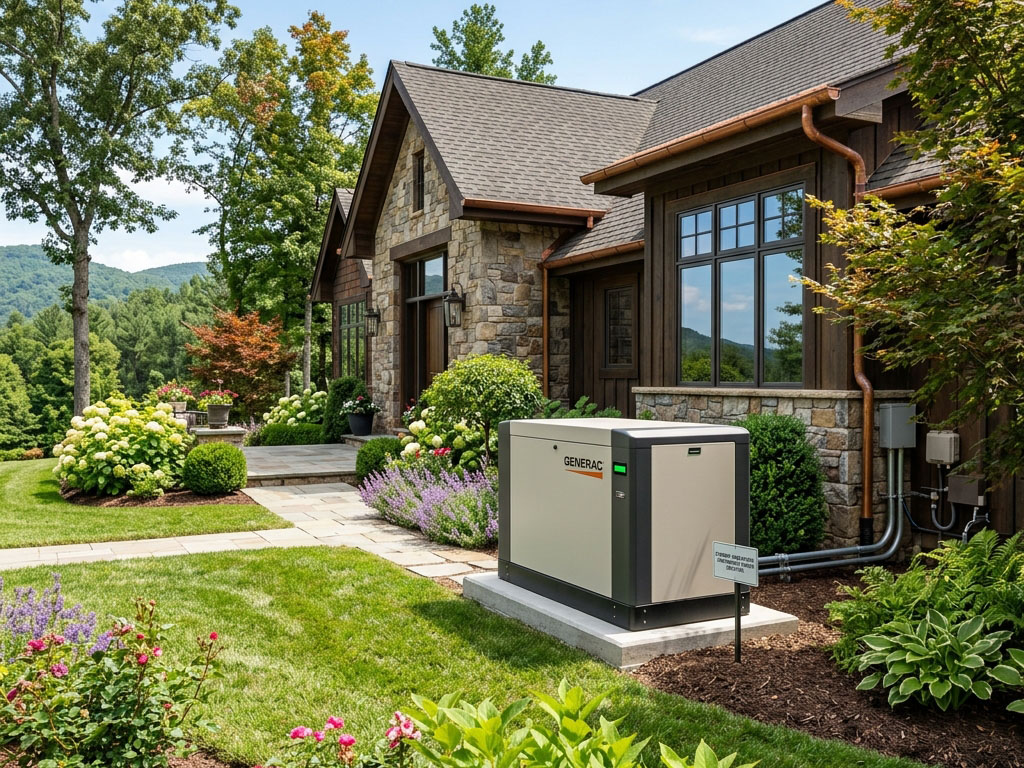
Roseville sits in PG&E territory for parts of Placer County, where PSPS wildfire shutoffs can kill your power for days. Even on the Roseville Electric grid, summer heat waves push demand past capacity, and winter storms take down service lines. A whole-house standby generator turns on automatically within seconds of an outage, keeping your air conditioning, refrigerator, medical equipment, internet, and security system running while your neighbors are in the dark. At Electrician Roseville, we handle the entire installation: generator sizing, concrete pad, electrical connection, transfer switch, gas or propane hookup coordination, permitting, and startup testing.

Our Generator Installation Services

Whole-House Standby Generator

We install Generac, Kohler, and Briggs & Stratton standby generators sized to your home's actual load, connected to your natural gas line or a propane tank, and wired through an automatic transfer switch that detects outages and starts the generator within 10 seconds. You don't touch anything. The lights stay on.
Transfer Switch Installation

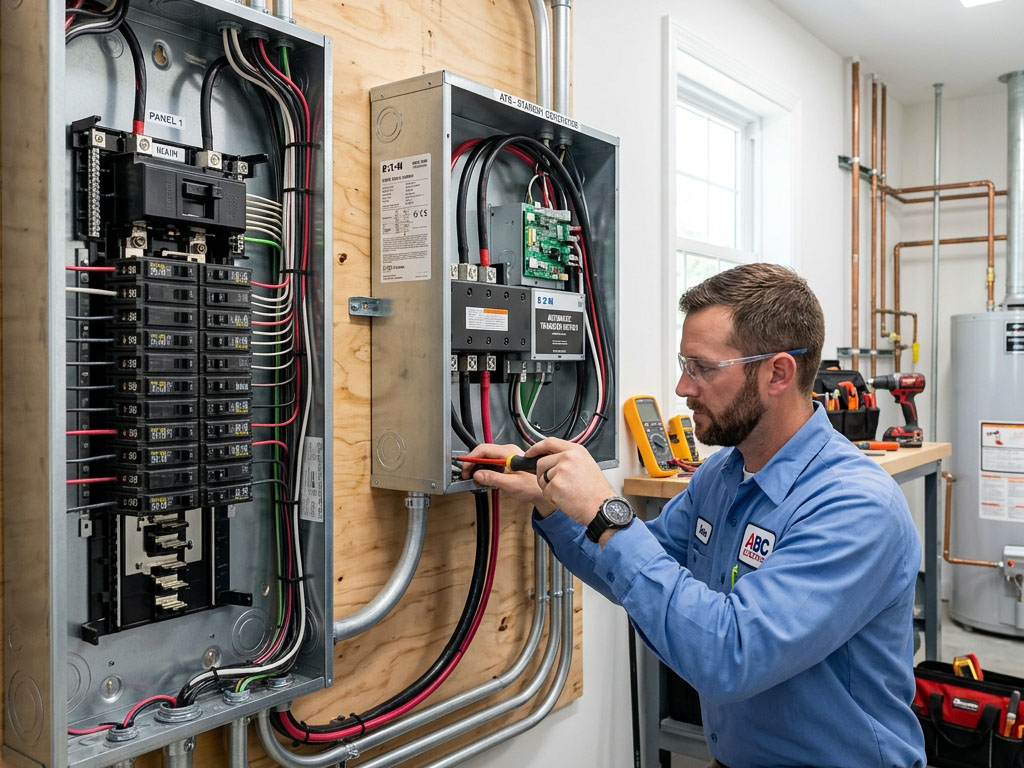
Every generator, whether standby or portable, requires a transfer switch to safely connect to your home's electrical panel. An automatic transfer switch (ATS) handles the switchover without any action from you. A manual transfer switch or interlock kit lets you safely connect a portable generator without back-feeding the utility grid. Back-feeding is illegal, dangerous to utility workers, and can destroy your generator when grid power returns.
Generator Maintenance & Repair

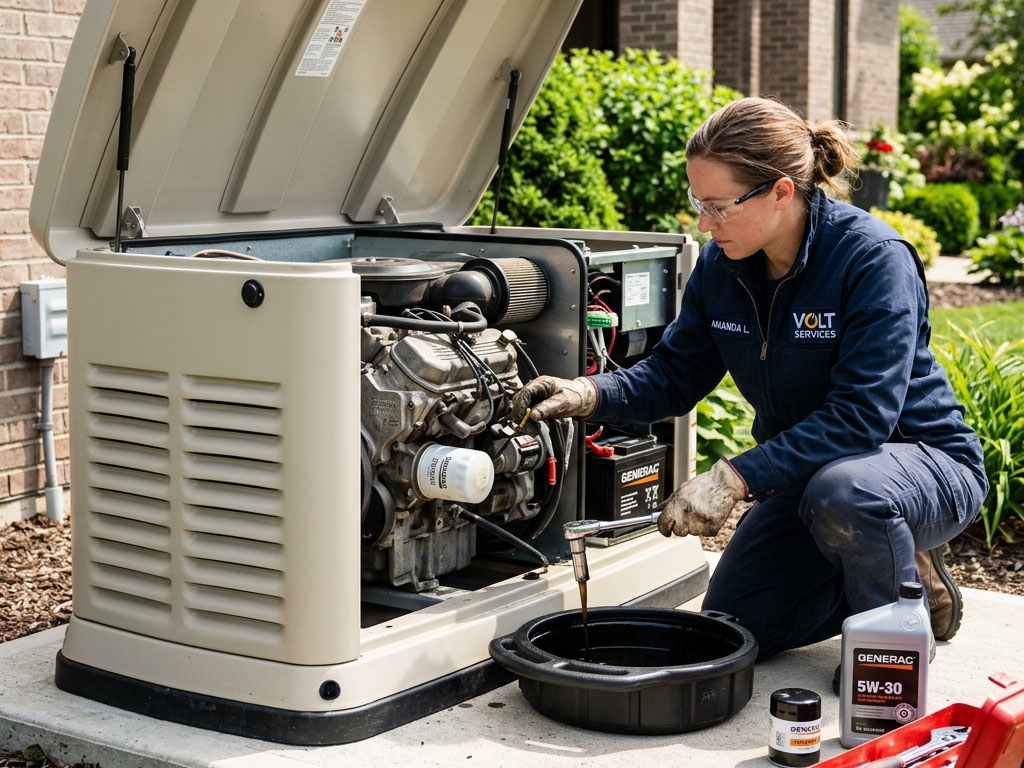
A generator that sits idle for months and never gets maintained will fail the one time you need it. We provide annual maintenance (oil change, air filter, spark plug, battery test, exercise verification) and troubleshooting for generators that won't start, won't transfer, or throw fault codes. We also perform load bank testing to verify your generator can handle its rated capacity under real conditions.

Specialized Services

Whole-House Standby Generator Installation

This is our complete, turnkey service from the initial sizing consultation to the final startup test. We calculate your home's critical and total electrical load, recommend the right generator capacity (with a 20–25% buffer for future needs), select the mounting location (meeting manufacturer clearance requirements and city setback rules), pour the concrete pad, install the automatic transfer switch at your panel, coordinate the gas line connection with a licensed plumber, wire the generator to your electrical system, pull all permits, and commission the system with a full load test. You receive the warranty registration, owner's manual, and a maintenance schedule.

Transfer Switch Installation

Whether you're connecting a standby generator or a portable one, the transfer switch is the safety and code-compliance component that makes it legal and safe. We install three types: Automatic Transfer Switch (ATS): For standby generators, detects outage, starts generator, transfers load, and retransfers to utility when power returns. All automatic. Manual Transfer Switch: For portable generators, you start the generator, plug it into the inlet box, and flip the transfer switch to move selected circuits from utility to generator. Interlock Kit: A mechanical device installed on your existing panel that prevents the main breaker and generator breaker from being on simultaneously. Code-compliant, lower cost than a full manual transfer switch.

Generator Maintenance & Repair

Your generator exercises itself weekly (a short automatic run cycle) but that doesn't replace professional maintenance. Manufacturer warranties require annual service, and a generator that hasn't been load-tested may start but fail to carry the full house when it matters. We perform comprehensive annual maintenance, replace cranking batteries before they fail, diagnose fault codes and ATS failures, and load-bank-test your system to verify full-capacity operation.

California PSPS: Why Placer County Homeowners Need Generators

What PSPS means for you

Power shutoffs can last 24–72+ hours. You receive limited advance notice (sometimes less than 24 hours). There's no utility timeline for restoration; it ends when fire risk drops. Your refrigerator, medical equipment, AC, internet, and security are all offline.

What a standby generator gives you

Automatic startup within seconds of shutoff. Continuous power for the duration of the event. No manual setup, no gasoline management, no extension cords. Peace of mind that your family and your property are protected.

CARB compliance note

The California Air Resources Board allows the operation of backup generators during declared PSPS events. Natural gas and propane generators produce significantly fewer emissions than gasoline portables.

Our Step-by-Step Installation Process

01

Site Visit & Load Calculation

We visit your property, inspect your electrical panel, calculate your actual loads, assess your gas service (or propane requirements), and identify the best generator placement considering manufacturer clearances, city setback requirements, and noise impact on neighbors.

02

Generator Selection & Quote

Based on your load calculation, fuel type, and budget, we recommend a specific generator model and capacity. Your quote includes everything: generator unit, concrete pad, automatic transfer switch, electrical wiring, gas line coordination, permits, and startup commissioning. No hidden add-ons.

03

Permitting

We pull the required permits from the City of Roseville or Placer County building, mechanical, and electrical. Generator installations require all three. We handle the applications and schedule inspections.

04

Installation

We pour the concrete pad, set the generator, install the automatic transfer switch at your panel, run the electrical wiring between the generator and ATS, and coordinate the gas line connection with a licensed plumber. The physical installation typically takes 1–2 days.

05

Startup, Testing & Registration

We commission the generator: verify oil levels, coolant, battery voltage, and fuel supply. We run the system through a full transfer test simulating a power outage and verifying the generator starts, transfers the load, and retransfers to the utility when power returns. We register the warranty with the manufacturer and set the weekly exercise schedule.

Don't Wait for the Next Outage. Install Your Generator Before It Happens.

Every outage teaches the same lesson: you either have backup power or you don’t. The time to install a generator is before the PSPS notice, before the summer heat wave, before the winter storm. We’ll size it right, install it right, and make sure it works when it counts.

Frequently Asked Questions

How much does a whole-house generator cost to install?
Fully installed residential standby generators typically range from $6,000–$15,000, depending on generator capacity (kW), transfer switch type, gas line modifications, concrete pad, and permit fees. Larger homes or estates with multiple AC units, workshops, or EV chargers can run $15,000–$25,000+. We provide an all-inclusive quote after the site visit, no surprise line items.
From signed contract to operational generator, the typical timeline is 2–4 weeks. This includes ordering the unit (usually in stock), pulling permits, pouring the pad, and completing the electrical and gas work. The on-site installation itself takes 1–2 days.
Yes. Generator installations require building, mechanical, and electrical permits from the City of Roseville (or Placer County for unincorporated areas). We handle all permit applications and schedule the required inspections.
Manufacturers require annual maintenance to maintain the warranty: oil and filter change, air filter, spark plug(s), battery test, coolant check (liquid-cooled models), and a load-transfer test. Your generator also runs a weekly exercise cycle automatically, but that doesn’t replace professional annual service.
Not directly and never with a suicide cord (double-male plug), which is illegal and dangerous. You need either a manual transfer switch or an interlock kit installed on your panel, plus a power inlet box on the exterior of your home. We install both; it’s a straightforward project that makes your portable generator safe and code-compliant.
Your power is shut off with limited notice and restored only when PG&E determines the fire risk has passed which can be 24–72+ hours. You lose refrigeration, AC, internet, security, medical equipment, and garage door access. A standby generator eliminates all of that; it turns on automatically and runs until the utility restores power.
Scroll to Top